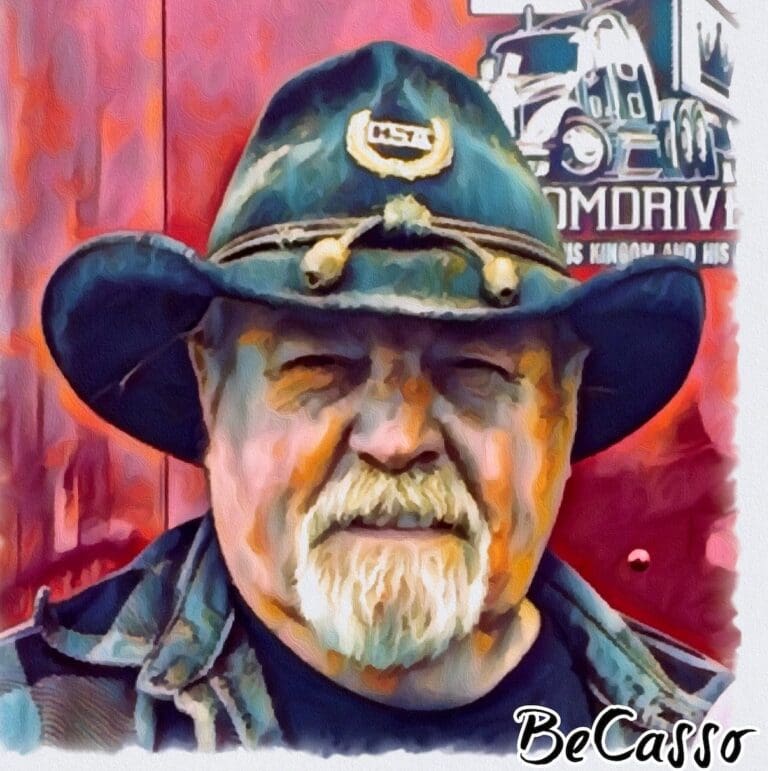
Dr. Tom Wadsworth has made quite a name for himself recently on the podcast circuit by asking questions about ecclesiology that most Christians seldom think to ask. What exactly was the Christian assembly in the New Testament? Why did Christians gather? Was the purpose primarily to conduct what we now call a “worship service,” or was it something considerably more communal and participatory? Wadsworth has spent years examining the language of the New Testament and argues that the earliest Christians did not ordinarily conceive of their gatherings as temple-like worship ceremonies. The dominant language is instead that of assembly, fellowship, teaching, encouragement, participation, and especially edification—the building up of one another. I find much of his argument persuasive. But I would add several qualifications, particularly concerning the transitional character of the apostolic age, the difference between the Temple and synagogue models, and the continuing value of creed, confession, and even liturgy in forming a Christian people in an increasingly post-Christian world.

The first distinction that needs to be made is between worship and assembly. We commonly use the expression “worship service” as though it were self-evidently a New Testament category. We speak of going to worship, beginning worship, worship leaders, worship music, and worship centers. Wadsworth’s research raises a legitimate question. When the New Testament actually describes Christians assembling, its emphasis repeatedly falls upon what believers are doing for one another. Paul tells the Corinthians that when they come together various members contribute, and his governing rule is simple: “Everything must be done so that the church may be built up” (1 Corinthians 14:26). Hebrews tells Christians not to forsake assembling, but the immediate purpose is that they consider one another, stir one another toward love and good works, and encourage one another. Throughout the New Testament Christians are commanded to teach one another, admonish one another, bear one another’s burdens, forgive one another, encourage one another, confess to one another, practice hospitality toward one another, and love one another. That is difficult to reconcile with an understanding of church in which several hundred people sit passively looking at the backs of one another’s heads while a handful of professionals perform on stage.
But another distinction helps us understand what happened historically: the Temple model versus the synagogue model. These were not the same institution and did not perform the same function. The Jerusalem Temple belonged to a sacerdotal world of sacred geography, altar, sacrifice, priesthood, ceremonial service, and restricted access. There were things only priests could do and places only priests could enter. At its center stood sacrifice. The worshiper approached God through an order established around sanctuary, altar, and priesthood. The synagogue was different. It possessed no sacrificial altar and no equivalent Levitical priesthood. It was an assembly of the people centered much more upon Scripture, prayer, instruction, exhortation, discussion, and communal identity. Jesus could enter a synagogue, read Isaiah, sit down, and expound what he had read. Paul could enter synagogues throughout the Roman world, reason from the Scriptures, and engage those assembled there. Whatever discontinuities Christianity introduced, the synagogue provides a much more natural social analogy for many features of the Christian ekklesia than does the Temple.

That distinction matters because Christianity did not establish another earthly Temple after Christ. It announced something far more radical: the people themselves had become God’s temple. Christ is the true High Priest. His sacrifice is once for all. There is no continuing altar upon which another propitiatory sacrifice must be offered. There is no geographical holy of holies to which Christians must travel. There is no Christian Levitical caste standing between ordinary believers and God. The dwelling place of God is now his people. Yet as Christianity developed institutionally, especially in the centuries following the apostles, some of the old Temple imagination gradually returned. Buildings became sanctuaries. Tables became altars. Ministers increasingly resembled priests. Particular spaces became holy. The assembly became increasingly ceremonial, and the ordinary Christian increasingly became an observer of religious acts performed by others. Wadsworth is right to make us ask whether Christianity, having been delivered from the Temple order, slowly reconstructed a Christian version of it.
Romans 12 becomes particularly important here because Paul actually uses unmistakably sacrificial language. “Therefore, I urge you, brothers and sisters, in view of God’s mercy, to offer your bodies as a living sacrifice, holy and pleasing to God—this is your true and proper worship.” Paul does not abolish sacrifice. He relocates it. The Christian himself is placed upon the altar. The sacrifice is living rather than dead. And the latreia—the religious service or worship—is no longer confined to something performed at a sacred location by a special class of men. It encompasses the believer’s embodied life before God.
What Paul does immediately afterward is especially revealing. Having told Christians to offer their bodies to God, he begins talking about the body of Christ. The believer is transformed by the renewing of his mind and then discovers himself as one member among many. One teaches. Another serves. Another encourages. Another gives. Another leads. Another shows mercy. Paul then moves naturally into the practical life of that community: sincere love, devotion to one another, honoring one another above ourselves, sharing with those in need, practicing hospitality, rejoicing with those who rejoice, mourning with those who mourn, living peaceably, and overcoming evil with good. The vertical and horizontal cannot finally be separated. Our service to one another is part of our service to God. Community is not an interruption of worship; rightly understood, it is one of worship’s principal expressions.
This is why I have said for years that if we are not serving Christ Monday through Saturday, what we do when we gather on Sunday is largely a formality. Romans 12 simply will not permit us to compress worship into an hour or two of scheduled religious activity. If presenting our bodies as living sacrifices constitutes our spiritual service, then worship follows us into our homes, marriages, occupations, friendships, finances, hospitality, conversations, and obligations toward our neighbors.
And here lies a perennial danger in religion. What begins as fervor becomes form; form becomes formalism; and formalism eventually becomes fossil. The first generation does something because it believes deeply. The second does it because it remembers why. The third does it because that is how it has always been done. Eventually the form survives while the life that produced it disappears. People may defend the ceremony precisely while forgetting the reality the ceremony was supposed to preserve. This can happen beneath stained glass and incense, but it can happen just as easily beneath stage lights and amplified guitars. It can happen in a Presbyterian church with a four-hundred-year-old liturgy or in a house church established four years ago. Moving twenty people from pews into someone’s living room does not automatically create New Testament Christianity. Fossilization is a problem of the heart before it becomes a problem of architecture.
Here I would place one qualification alongside Wadsworth’s otherwise valuable work. We must be cautious about treating every feature of the apostolic church as an immutable blueprint for every subsequent generation. The church described in Acts and the epistles existed during an extraordinary period of covenantal transition. Apostles were still alive. Revelatory gifts were operating. The New Testament canon was being written. Jewish and Gentile believers were being brought together in circumstances that had never previously existed. The Jerusalem Temple was still standing. Hebrews describes the old covenant as obsolete, aging, and ready to disappear. The approaching Day stood immediately before those believers. The apostolic church was not merely young; it existed during the closing years of an age.
That means we must distinguish between permanent New Covenant principles and temporary apostolic circumstances. The fact that Christians gathered in houses does not mean houses constitute divinely mandated architecture. The fact that someone brought a revelation to the Corinthian assembly does not mean every twenty-first-century Christian gathering requires spontaneous revelation. The fact that the apostolic church possessed little political capital and few permanent institutions does not mean mature Christian civilization may never build institutions. They turned their world upside down and ultimately outlasted the Roman Empire without cathedrals, seminaries, publishing houses, endowed institutions, or political patronage. That should humble our confidence in institutional machinery. But it does not follow that every later institutional development represents apostasy. The question is whether an institution serves the life of the body or gradually substitutes itself for that life.
This is also where I would hesitate to frame the issue simply as liturgy versus community. Liturgy can become dead formalism, but community can become directionless sentimentality. A group of Christians sitting around a living room sharing their thoughts is not necessarily more biblical than Christians reciting the Apostles’ Creed. Community requires content. Fellowship requires a common faith. Christian love requires a Christian understanding of what love actually is. Otherwise community eventually becomes little more than friendship with religious vocabulary attached.
In fact, our increasingly post-Christian circumstances may make creeds and confessions more important rather than less. There was a time when churches could assume that much of the surrounding civilization retained at least a residue of Christian moral understanding. Even people who seldom attended church generally knew what Christians meant by marriage, fidelity, adultery, duty, honor, sin, repentance, modesty, fatherhood, motherhood, charity, justice, and truth. That inherited moral vocabulary has rapidly disappeared. The surrounding culture no longer merely fails to reinforce Christian categories; increasingly it supplies competing ones.
Every culture catechizes. Advertising catechizes desire. Entertainment catechizes morality. Pornography catechizes sexuality. Consumerism catechizes happiness. Politics continually offers rival doctrines of salvation. Social media teaches people what deserves approval and what deserves condemnation. Our children and grandchildren are being discipled constantly whether anybody calls it discipleship or not. In such a world the church cannot afford theological vagueness.
This is where creed, confession, and properly understood liturgy have genuine value. They train the Christian conscience. A creed tells us who God is and what he has done. A confession teaches how the great propositions of Scripture fit together. The Ten Commandments give moral categories. The Lord’s Prayer teaches us what to desire. The Psalms teach us how to praise, lament, rejoice, fear, hope, and grieve. The Lord’s Supper reminds us that our life comes from Christ and that we belong to a body larger than ourselves. Repetition is not necessarily vain repetition. Sometimes repetition is how a civilization remembers.
The problem therefore is not form itself. Human beings cannot live without forms. Every church has a liturgy, including the church that insists it has none. Three songs, announcements, another song, a forty-minute sermon, prayer, and dismissal is a liturgy every bit as certainly as a written order of worship. The question is whether our forms remain servants of Christian formation or become substitutes for Christian life.
Perhaps that gives us a better way to reconcile Wadsworth’s emphasis upon community with the legitimate place of liturgy. Creeds train memory. Confessions train judgment. Liturgy trains habits. Community gives us somewhere to practice all three. Creed without community can become abstraction. Community without creed can become sentimentality. Liturgy without life becomes ritual. Teaching without participation can turn Christians into consumers. Participation without sound teaching can leave them enthusiastic but immature.
What we need is not a choice between the two but their proper integration: truth confessed, truth remembered, truth embodied, truth practiced among one another, and truth handed to the next generation.
That seems to me remarkably close to the movement of Romans 12. Theology produces transformation. Transformation produces service. Service produces a functioning body. And the functioning of that body constitutes part of the living sacrifice Christians offer to God.
This is why I substantially agree with Wadsworth while retaining a few important caveats. He has done the church a service by forcing us to reconsider whether we have confused going to church with being the church, and whether we have imported too much of the Temple into something the apostles understood principally as an assembly. He is right to recover edification, participation, shared responsibility, hospitality, plural leadership, and the enormous collection of New Testament commands directed toward “one another.” He is right that Christianity cannot be reduced to religious professionals doing Christian things while everybody else watches.
But I do not believe the answer is simply to recreate the sociology of AD 50. Nor do I believe two thousand years of accumulated Christian wisdom should be discarded merely because the apostles did not possess it. Nicea and Chalcedon preserved distinctions the church learned it desperately needed. The great confessions preserve theological memory accumulated through centuries of controversy. Later development is not necessarily corruption. The proper question is whether the development faithfully serves the apostolic reality or obscures it.

The church emerging into this post-Christian age may therefore need to become simultaneously more confessional and more communal, more doctrinally deliberate and less clerically dependent, more liturgically formative and less liturgically theatrical. We need Christians who know what they believe and communities in which those beliefs become visible. We need assemblies that prepare Christians to serve Christ throughout the week rather than religious events that provide the illusion that attending them constitutes Christian faithfulness.
The Temple has passed away. God’s people are his temple. Christ’s sacrifice is complete. And according to Romans 12, the sacrifice now placed upon the altar is us.
So when we gather, let us teach, confess, pray, sing, remember, encourage, correct, eat, rejoice, mourn, and build one another up. Then let the living sacrifices walk out the door and continue their worship Monday morning.
Because if Christ receives nothing of us Monday through Saturday, Sunday ceremony will eventually become exactly what religious ceremony always becomes when separated from life:
Fervor becomes form. Form becomes formalism. Formalism becomes fossil.
The answer is not to destroy every form.
It is to recover the life that made the form worth preserving.