The US allowed anti-Castro terrorists to operate for decades
Now that Trump is snared by the “escalation trap” in Iran, he has turned his attention to overthrowing the government of Cuba. In addition to a new round of crippling sanctions on trade, travel, and oil shipments, the latter responsible for shortages and blackouts, the Trump administration unsealed an indictment of former Cuban leader Raúl Castro over the 1996 shoot-down of Brothers to the Rescue aircraft. Castro, now 94, was Cuba’s defense minister at the time.
Acting Attorney General Todd Blanche announced that Castro and other former senior members of Cuban leadership and the military are facing charges of conspiracy to kill US nationals, destruction of aircraft, and four individual counts of murder.
“For nearly 30 years, the families of four murdered Americans have waited for justice,” Blanche said during a ceremony in Miami to remember those who were killed in the incident. “They were unarmed civilians and were flying humanitarian missions for the rescue and protection of people fleeing oppression across the Florida straits.”
CIA Operative José Basulto and Brothers to the Rescue
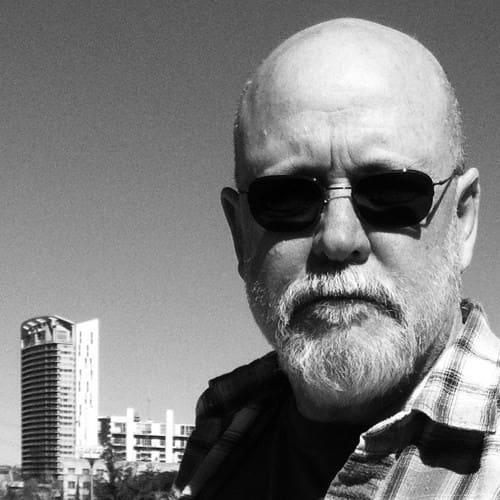
Brothers to the Rescue (Hermanos al Rescate) is an activist group based in Miami headed by José Basulto. The organization claims to be a humanitarian group that assists and rescues raft refugees emigrating from Cuba and to “support the efforts of the Cuban people to free themselves from dictatorship through the use of active non-violence,” according to an archived Hermanos web page.
News reports generally avoid background on Hermanos and its leader, Basulto, a CIA operative and an admitted terrorist. During testimony in the trial of Gerardo Hernández, a Cuban intelligence agent (a member of the Cuban Five, or Miami Five), Basulto “shared with jurors his history as a 1960s anti-Castro CIA operative and his admitted cannon assault on a Cuban hotel nearly 40 years ago,” the Miami Herald reported in early 2001.
A native of Santiago de Cuba, Basulto testified that he was a young Boston College student when he joined the CIA-led war against Castro. Basulto trained in Panama, Guatemala and the United States and was infiltrated back into Cuba—posing as a physics student at the University of Santiago—to help prepare the ground for the Bay of Pigs invasion.
During an interview with Gonzalo Porcel in 1999, Basulto admitted he trained with the CIA in Virginia “in different things like demolitions, foreign armaments, and intelligence, propaganda, and a few other things that were pertinent to the type of work we were doing, like psychological operations and so forth.”
Brothers to the Rescue was founded in 1991 and conducted over 2,400 aerial missions, reportedly rescuing more than 4,200 individuals during the 1994 Cuban rafter crisis. However, saving Cuban rafters at sea was not the organization’s only mission.
The Brothers “started to redefine their mission as one of not helping innocent people at risks for their lives but to carry out a political agenda of harassing and threatening the Cuban government by over flights, dropping leaflets (from the air into Cuba),” said former White House advisor Richard Nuccio, the top advisor on Cuba to President Bill Clinton. “It made the Cubans angry.”
The commander of the Cuban air force and air defenses “was instructed that violations . . . should no longer be tolerated and that he was authorized, if such a situation arose again, to decide personally on military interception and shooting down, if so required.”
Cuba Warned It Would Shoot Down Aircraft Violating Its Airspace
On February 24, 1996, two Brothers to the Rescue Cessna Skymasters, which were engaged in the act of dropping leaflets on Cuba, were shot down by a Cuban Air Force MiG-29UB, killing four people.
A year prior to the shoot-down, the Cuban government filed multiple protests on repeated violations of its airspace by Brothers to the Rescue aircraft overflying populated areas and dropping thousands of leaflets and other materials calling for popular insurrection against the government, according to documentation at the National Security Archive. The FAA opened a protracted investigation and warned Basulto numerous times not to continue his “taunting” provocations.
Nuccio and State Department undersecretary Peter Tarnoff, along with Secretary of Transportation Federico Peña, repeatedly voiced their concerns to the FAA. They emphasized the need for Brothers to the Rescue flights to be permanently grounded and cautioned that Cuba’s redlines, which are meant to safeguard its security, should be taken seriously.
After the shoot-down, the FAA issued a clear and unambiguous “cease and desist” order to Basulto. This order was issued in response to Basulto’s “careless or reckless” operations, which posed a significant risk to the lives and property of others, according to documents released through the Freedom of Information Act.
On the day before the shoot-down, according to the 2014 book Back Channel to Cuba: The Hidden History of Negotiations Between Washington and Havana, by American University Cuba specialist William LeoGrande and Archive senior analyst Peter Kornbluh, Nuccio
sent an email to National Security Advisor Sandy Berger alerting him that Basulto intended to fly the next day. “Previous overflights by Jose Basulto of the Brothers have been met with restraint by Cuban authorities,” he reported. “Tensions are sufficiently high within Cuba, however, that we fear this may finally tip the Cubans toward an attempt to shoot down or force down the plane,” he warned.
Nuccio contacted the FAA and instructed them to block the flights. The FAA, however, refused and only promised to warn Basulto about the overflights. While no explanation for the refusal was given, it was likely at the behest of the CIA, although there is no documentation of that.
“Cuban officials used every means of communication available: diplomatic notes, military briefings, intermediaries, and back-channel contacts to make clear their patience had run out,” notes Nicholas Greven for Jacobin.
History of Terror Attacks Against Cuba
In the 1990s, the US government, CIA, and the Cuban exile community in Miami were busy attempting to subvert the Cuban government. The following is taken from Summary of Terrorist Actions against Cuba (1990-2000):
- “Cuban Liberation Army” terrorists, led by Higinio Diaz Anne, entered Cuba at Santa Cruz del Norte to engage in sabotage.
- Counter-revolutionaries from Miami infiltrated Cuba to sabotage tourist shops.
- A group of terrorists set out from the United States in order to attack economic targets along the Havana coastline.
- Brothers to the Rescue assisted a terrorist operation that sabotaged an economic target in Villa Clara province.
- In 1992, the Melia Varadero Hotel was attacked by Miami-based terrorists.
- The following year, Tony Bryant, leader of the terrorist group “Commandos L” announced plans to carry out attacks against hotels in Cuba.
- Brothers to the Rescue planned to blow up a high-tension pylon near San Nicolas de Bari in Havana province in 1993.
- Brothers to the Rescue encouraged attempts on the life of Fidel Castro, while Andres Nazario Sargen, head of the terrorist group ALPHA 66, publicly announced that his organization had carried out five illegal operations against Cuba.
- Humberto Perez, spokesperson for ALPHA 66, threatened to murder tourists visiting the island. In 1994, the Guitart Cayo Coco Hotel was attacked a second time. Three years later, an explosive device was detonated in the Melia Cohiba Hotel in Havana. Additionally, bombs exploded in the Triton, Chateau Miramar, and Copacabana Hotels.
- Terrorist Luis Posada Carriles and five of his accomplices attempted a failed assassination of Castro in late 1994.
- In 1996, the FBI arrested and then released five armed terrorists intercepted at Marathon Key and headed for Cuba.
- An unidentified person was arrested when he was caught sneaking into Cuba through Punta Alegre, Ciego de Avila, on a boat carrying weapons and a large cache of military equipment.
- The Cuban government arrested Raul Cruz Leon, responsible for placing six bombs that exploded in various hotels in the Cuban capital, including one that killed Italian tourist, Fabio Di Celmo.
Double Standards
The decades-long illegal effort by the US to destabilize and terrorize the Cuban people is not part of the argument in regard to the arrest of Raúl Castro and his involvement in the downing of Brothers to the Rescue aircraft. There would be little argument if the US had shot down Cuban aircraft assisting anti-American terrorists in Miami.
Finally, consider that not a single person was arrested and charged in the downing of Iran Air Flight 655, a routine commercial flight from Bandar Abbas, Iran, to Dubai. The civilian aircraft was blown out of the sky by a missile launched from the USS Vincennes in the Persian Gulf on July 3, 1988. Then Vice President George H. W. Bush represented the United States at the Security Council and defended the action as appropriate for the circumstances.
“After this unforgivable crime, the American authorities tried to justify this hostile act as a mistake,” reported the Iran Press. “However, due to the fact that the Vincennes was equipped with the most advanced radar and computer systems, as well as the specificity of the type of aircraft, it became clear that there was no possibility of mistake, and this action was completely deliberate and hostile.”
For the United States, there are two versions of justice—one for designated enemies, and another for crimes perpetuated by the US and its allies and co-conspirators, including anti-Castro terrorists plotting to murder civilians at tourist hotels in Cuba.
The poster child for this hypocrisy is Luis Posada Carriles, a Cuban terrorist responsible for the 1976 bombing of a Cuban airliner that killed 73 people. Posada was acquitted on all charges against him in 2011 and lived out the remainder of his life in Miami.
Article posted with permission from Kurt Nimmo